Every hour your team manually copies order data into a shipping form is an hour of labour that generates zero revenue. For Ukrainian e-commerce businesses dispatching hundreds of parcels a day through Nova Poshta, that overhead adds up fast. We integrate the Nova Poshta API directly into Laravel-based order management systems — and the results are consistent: fewer errors, faster fulfilment, and measurable staff time recovered.
What the integration covers
A full Laravel + Nova Poshta integration handles the complete fulfilment loop:
- Automatic TTN generation — the moment an order status changes to "confirmed," the system calls Nova Poshta's
newInternetDocumentendpoint, creates a waybill, and writes the tracking number back to the order record. - Real-time status sync — a scheduled Laravel job polls
getStatusDocumentsevery 15 minutes and updates order status in the CRM without manual intervention. - Branch and city autocomplete — customers pick their delivery branch from a live Nova Poshta directory, eliminating invalid address errors at checkout.
- Delivery cost estimation —
getDocumentPricereturns the accurate delivery cost at checkout, so the customer sees the real figure, not an approximation.
Why Laravel handles this well
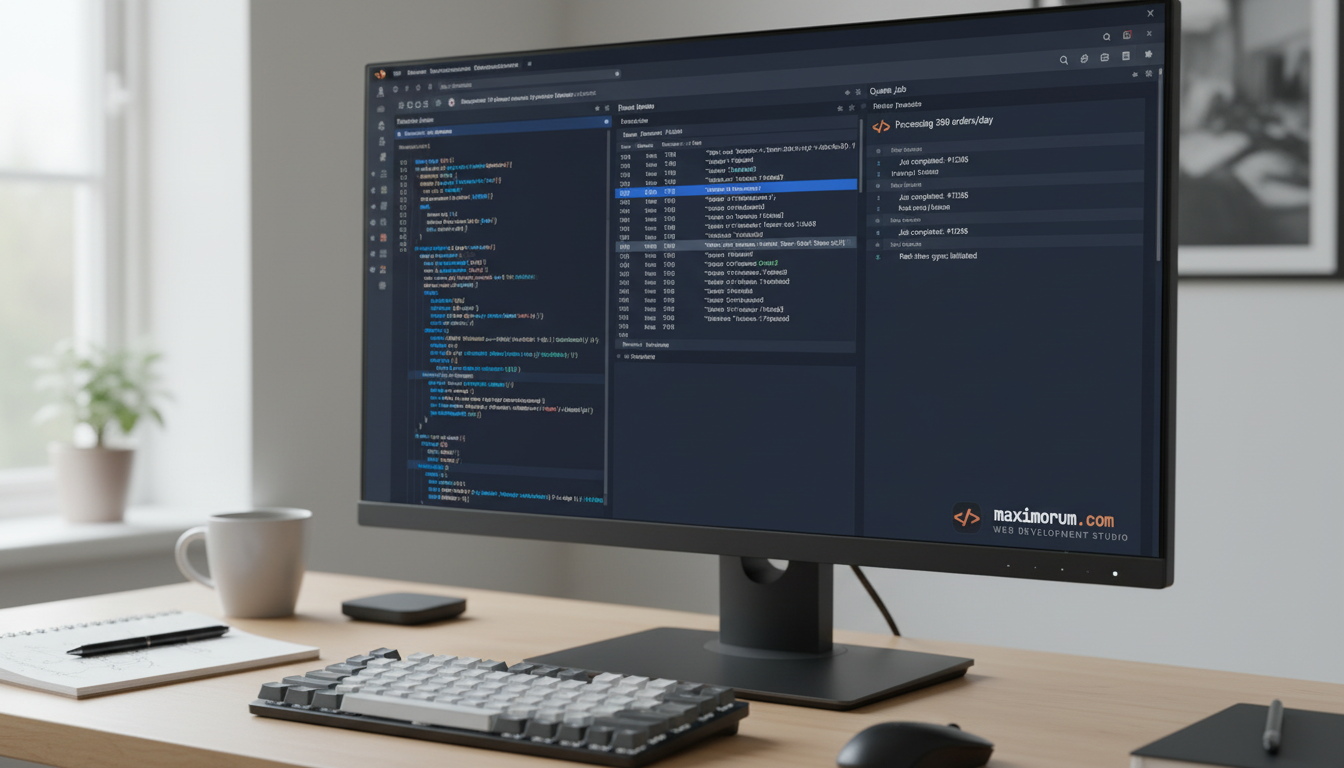
Laravel's built-in job scheduler, queues, and HTTP client make external API orchestration clean and testable. We wrap each Nova Poshta endpoint in a dedicated service class, cover it with feature tests against a sandbox environment, and deploy it behind the queue worker — so a Nova Poshta timeout never blocks a web request.
The business case
For a client processing 300 orders per day, manual TTN entry took roughly 2.5 hours of warehouse staff time. After integration, that process runs automatically in under 4 minutes. The ROI on the development investment lands in the first month.
If your store runs on OpenCart, WooCommerce, or a custom Laravel backend, the integration path is the same — the API is consistent, and we have the boilerplate tested and ready to deploy.