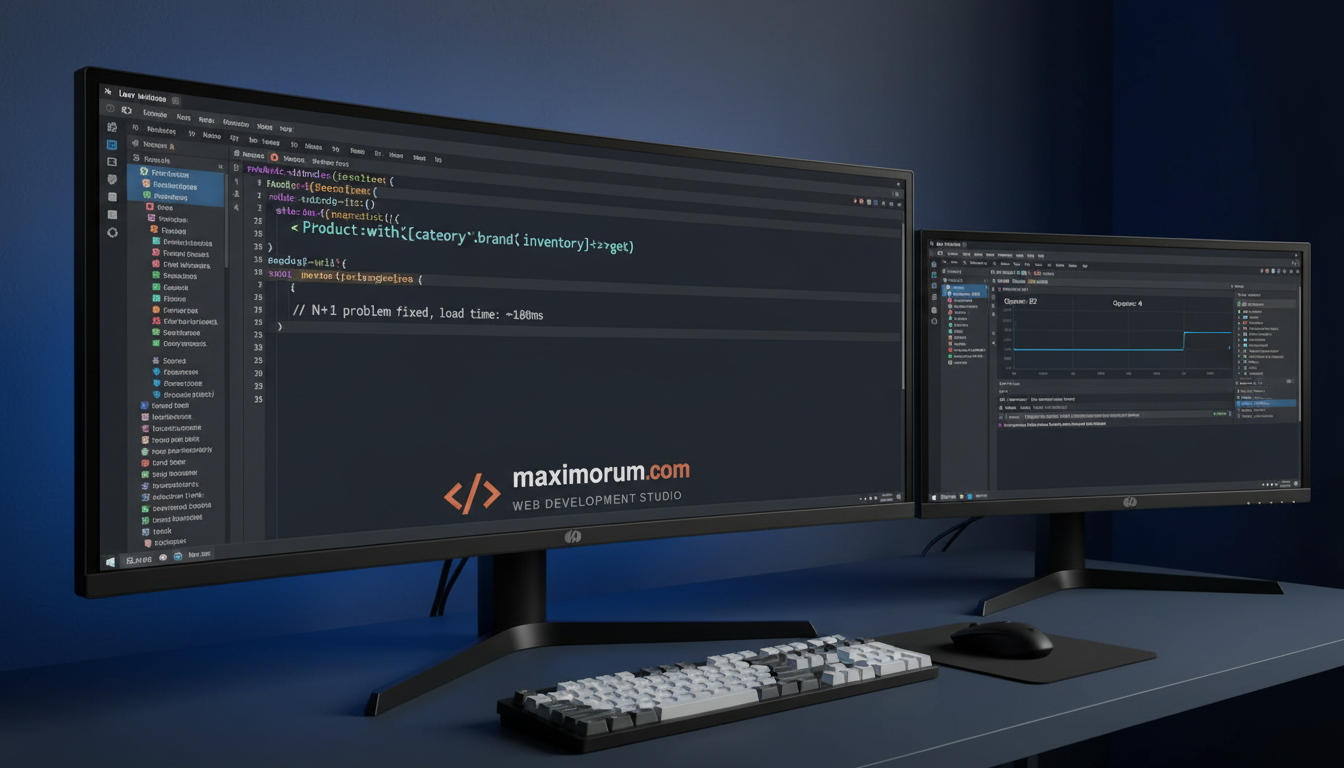
Most Laravel e-commerce stores ship with a hidden performance drain
The N+1 query problem. A product listing of 50 items can silently fire 51+ database queries on every page load. The fix takes under an hour — the revenue impact is immediate.
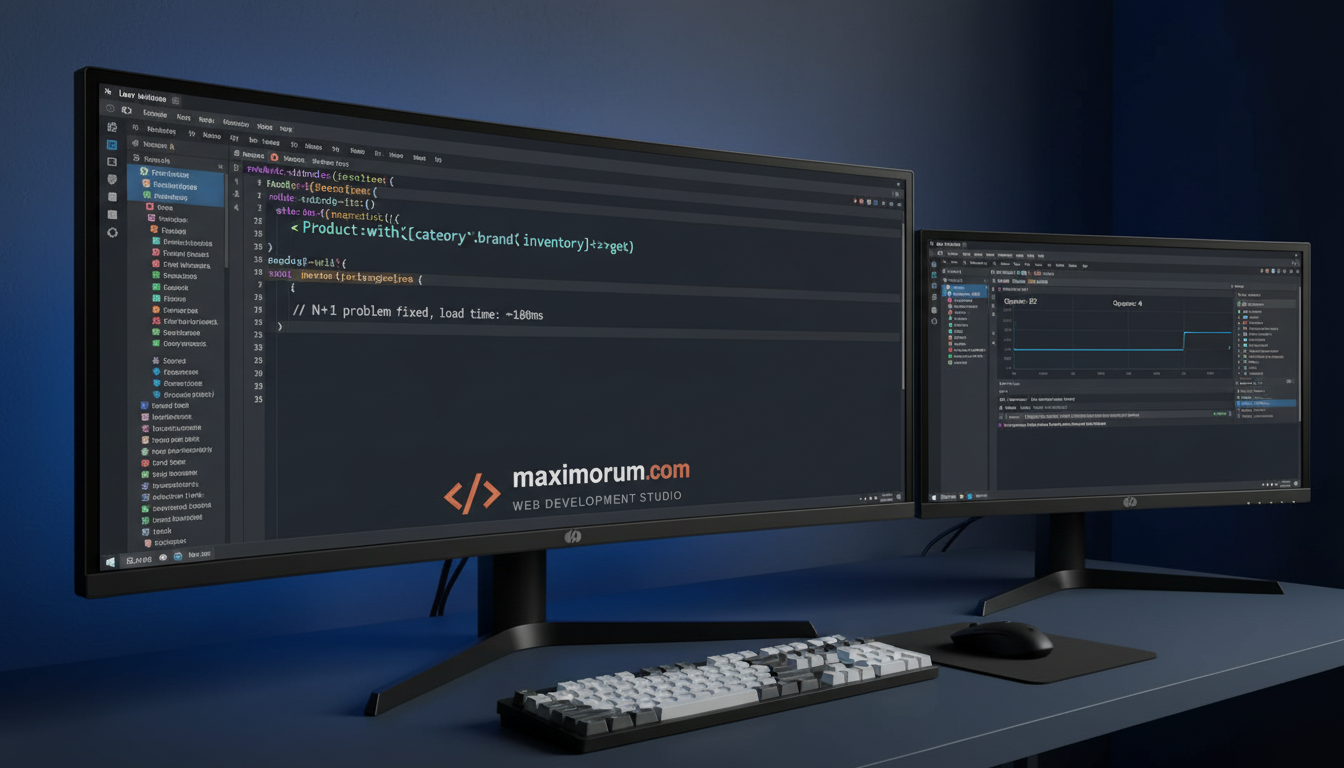
What the N+1 problem costs you
Slow pages lose revenue. Google's data shows a 1-second delay in mobile load time reduces conversions by up to 20%. If your Laravel store queries the database once per product to fetch its category, brand, or inventory status, you pay that penalty on every request — silently, at scale.
How Eloquent's eager loading solves it
Laravel's with() method collapses N+1 into a fixed two-query pattern. Instead of:
$products = Product::all();
foreach ($products as $product) {
    echo $product->category->name; // fires a query per product
}
Use:
$products = Product::with(['category', 'brand', 'inventory'])->get();This fetches all related data in two queries regardless of how many products you list.
Scope it to your bottlenecks
Use Laravel Debugbar or Telescope in development to surface N+1 hot spots. In production, target your catalogue pages, cart, and checkout — these carry the most traffic and the highest conversion stakes.
Common relations to eager-load in e-commerce
- category and subcategory
- images — avoid loading product images one by one
- reviews with aggregate counts
- discounts and priceRules
What to expect after the fix
A typical mid-size Laravel store — 5,000 SKUs, moderate traffic — drops catalogue page query count from 80+ to 4–6 after systematic eager loading. Page response time falls from 900 ms to under 200 ms. That is a direct conversion gain without a single infrastructure upgrade.
Chunking for bulk operations
If you run bulk operations (exports, price updates, email campaigns), combine eager loading with chunk():
Product::with('pricing')->chunk(200, function ($products) {
    // process 200 at a time
});
This keeps memory flat while keeping queries efficient — essential for stores processing thousands of orders.
Ready to audit your Laravel store's database performance? MaxiMoruM engineers have tuned PHP and Laravel applications for over 20 years. We identify bottlenecks, implement fixes, and deliver measurable results — not estimates.