Slow content pages cost you conversions. When your blog, landing pages, and product copy all render through one monolithic CMS, a traffic spike on an article can drag down your checkout. Decoupling fixes that.
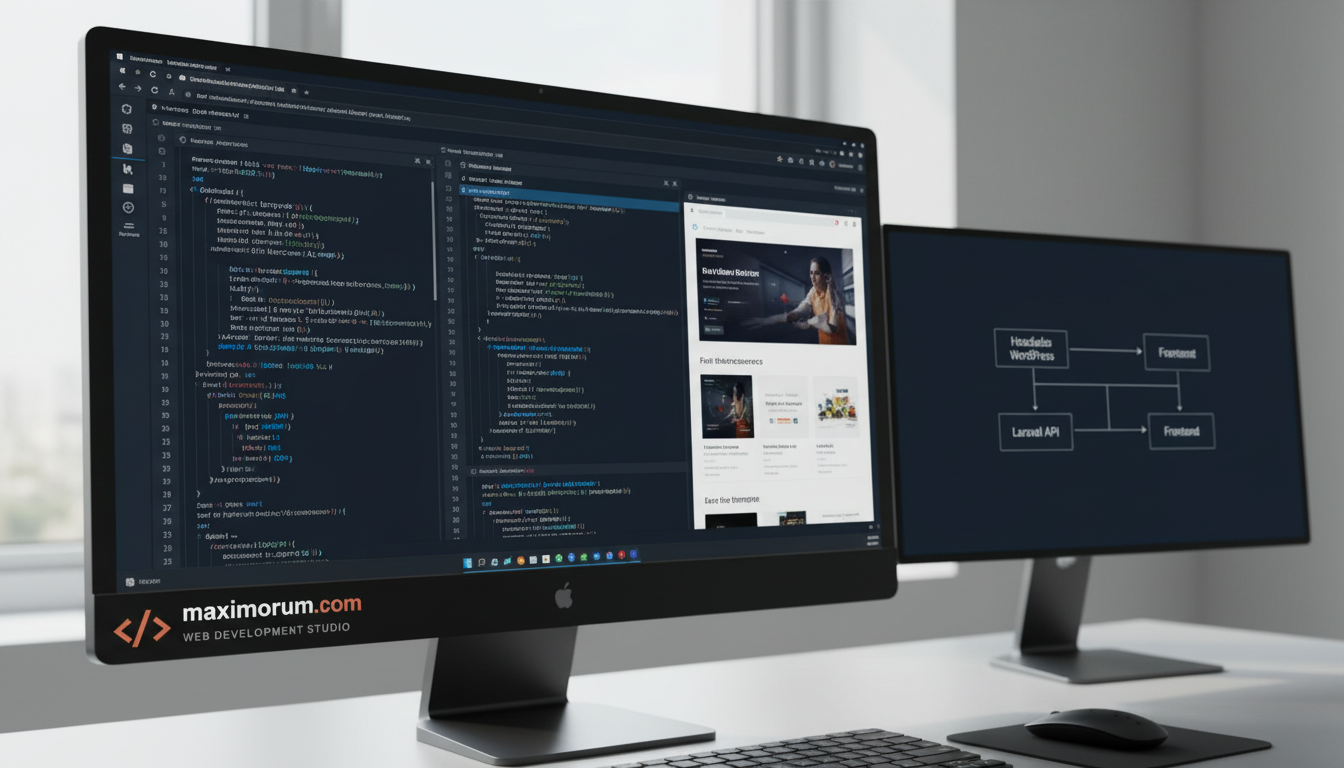
In a headless setup, WordPress keeps doing what it does best — managing content — but stops rendering pages. Instead it exposes content through the WordPress REST API. A Laravel application sits in front, pulls that content, caches it, and serves your storefront. Your marketing team keeps the editor they know; your engineers gain a fast, controlled front end.
The business case is concrete:
- Faster pages. Laravel caches API responses in Redis, so a published article serves in milliseconds instead of booting the full WordPress stack on every request.
- Better security. WordPress sits behind your application, not on the public edge. Fewer plugins are exposed, and the attack surface shrinks.
- Independent scaling. A viral blog post no longer competes with checkout for server resources — content and commerce scale separately.
- One content source. The same WordPress content feeds your web storefront, a mobile app, and email, through one API.
How we build it: we connect WordPress via the REST API, map posts and pages into Laravel models, and cache responses with tag-based invalidation so an edit clears only the affected pages. We add webhook-driven cache busting, so published changes appear within seconds. For e-commerce, we keep product and order logic in Laravel or OpenCart, and reserve WordPress for editorial content only.
This pattern suits stores that publish heavily — guides, reviews, SEO content — and need that traffic to never threaten the checkout path.
Want a faster, decoupled content layer for your store? Talk to our team at https://maximorum.com/
Headless WordPress + Laravel: a faster, safer content layer for e-commerce
D