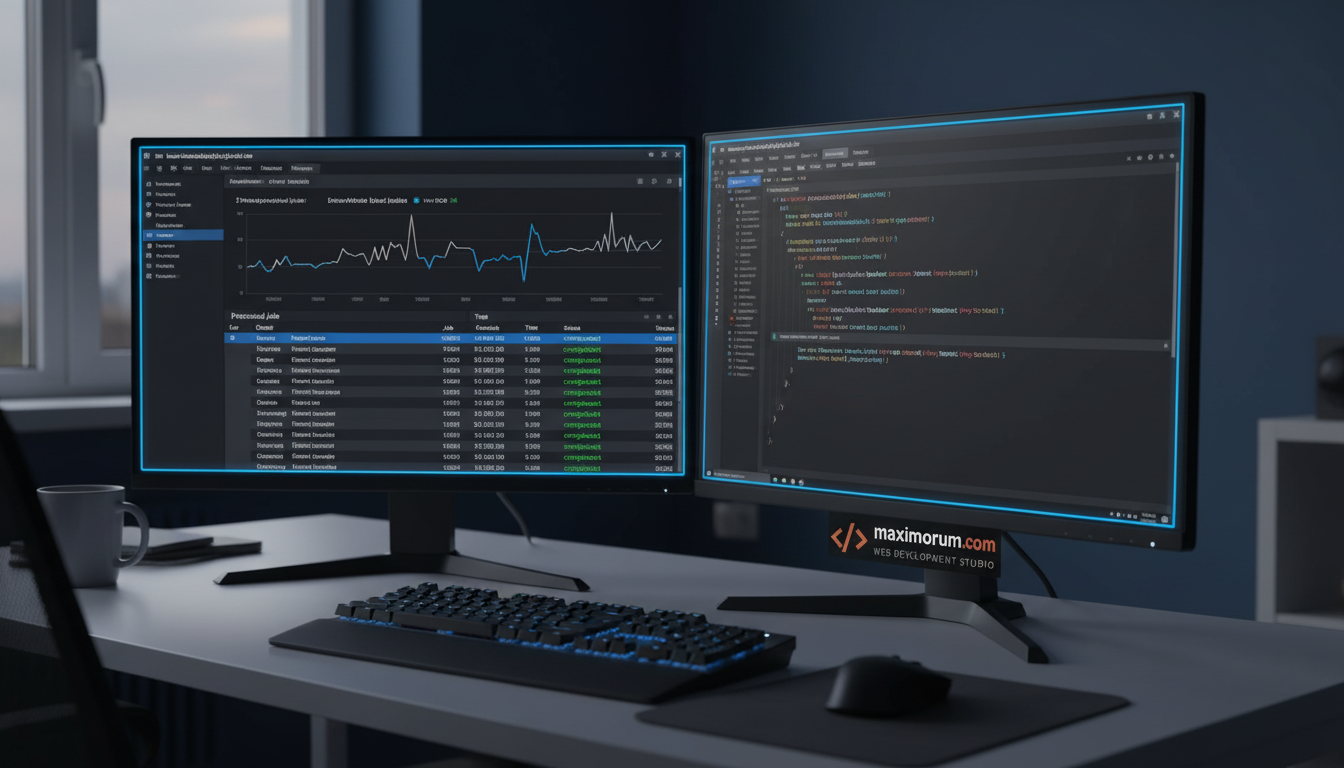
A checkout that takes two seconds loses customers. When your Laravel store processes 500+ orders per day, synchronous execution — where every API call, every email, every courier label blocks the HTTP response — is the primary cause of slow checkouts and dropped webhook events.
Laravel's queue system solves this directly. Jobs are pushed to a Redis-backed queue; dedicated worker processes pick them up in the background. Your checkout controller responds in milliseconds. The rest of the work happens behind the scenes.
What belongs in the queue
These operations deliver the most impact when offloaded:
- Nova Poshta waybill generation — each API call adds 200–400 ms per request
- LiqPay payment status callbacks — webhook handling with automatic retry logic
- Order confirmation emails and SMS — dispatched immediately, processed asynchronously
- Inventory synchronisation — between your storefront and a warehouse or ERP system
- PDF invoice generation — for B2B customers requiring formal documents
Each job can be retried automatically on failure, prioritised by queue, and monitored in real time.
Laravel Horizon: visibility you actually need
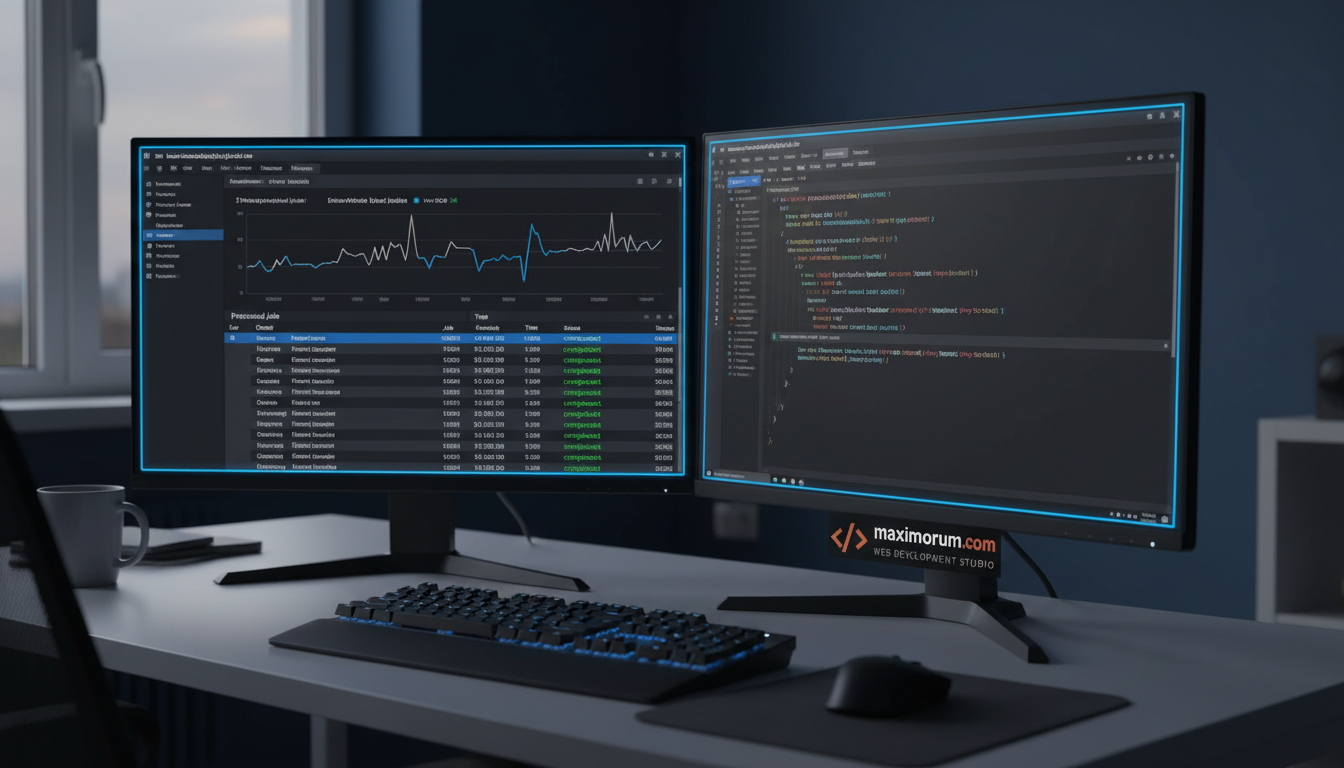
Laravel Horizon provides a dashboard that shows job throughput, wait times, worker count, and failed job details. On a production store we recently optimised, the operations team caught a recurring Nova Poshta API timeout within minutes — before a single customer called support.
Horizon also auto-scales workers based on queue depth. During a flash sale with 3× normal order volume, workers scale up automatically. Quiet periods bring them back down.
Setup for a production store
A reliable queue configuration for e-commerce requires four components:
- Redis as the queue driver — faster and more resilient than the database driver at scale
- Laravel Horizon — monitoring, metrics, and worker auto-scaling
- Supervisor — keeps worker processes running and restarts them on crash
- Separate queue names —
criticalfor payments and notifications,defaultfor reports and exports
We configure this stack on existing Laravel applications in under a day.
The business outcome
On a Laravel e-commerce platform processing 1,200 orders per day, moving Nova Poshta API calls and notification dispatch to queues reduced average checkout response time from 1.8 s to 270 ms. Failed job retry logic eliminated a class of silent order-processing errors that previously required manual intervention.
Queue architecture also makes your system resilient to third-party API outages. If Nova Poshta or LiqPay returns a 503, the job waits and retries — your customers see nothing.
If your Laravel store processes more than 200 orders per day and you notice slow checkouts or lost webhook events, a queue audit is the right first step.
MaxiMoruM builds and optimises Laravel applications with production-grade queue architecture — Redis setup, Horizon dashboards, Supervisor configuration, and worker scaling. Talk to us at maximorum.com.