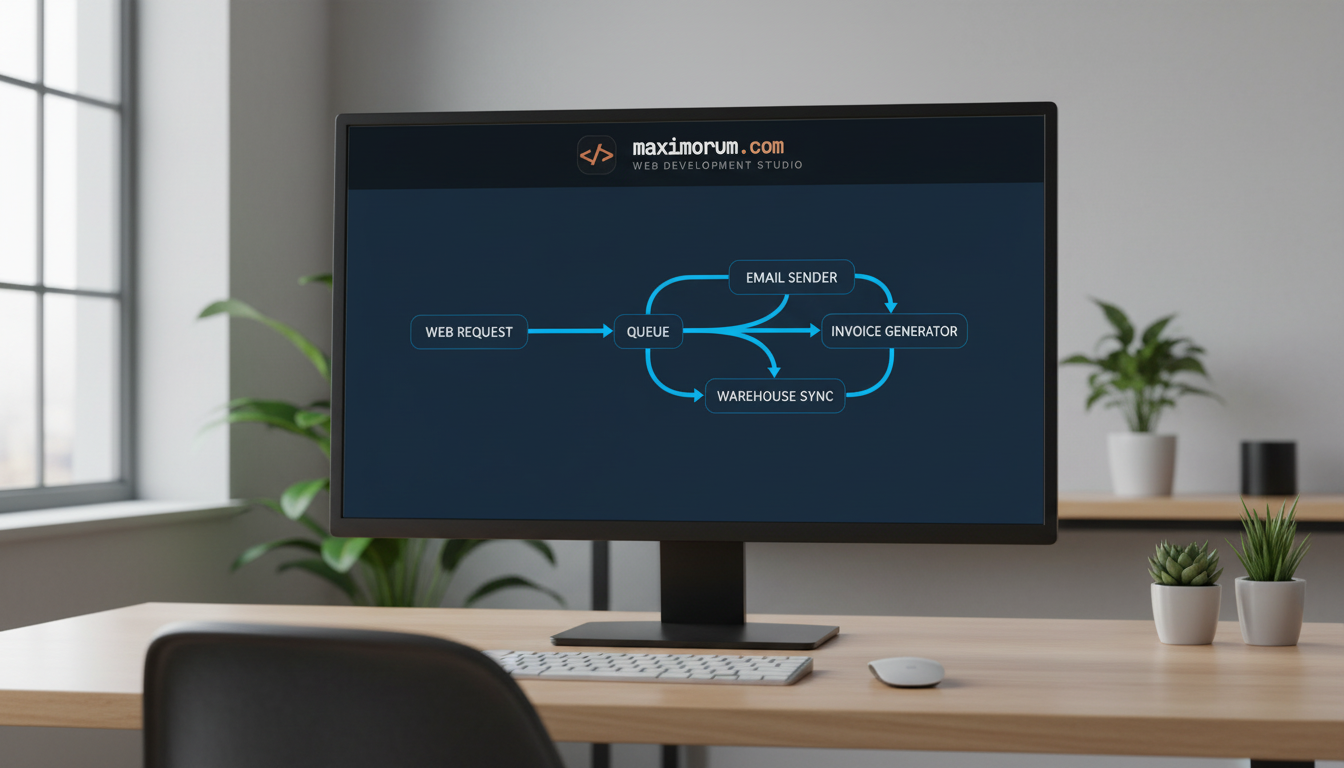
Processing thousands of orders, sending transactional emails, generating PDF invoices, syncing inventory with a warehouse system — if your application handles all of this synchronously during a web request, your customers wait. That wait costs you conversions.
We deploy Laravel queue workers as the backbone of high-throughput e-commerce platforms because they move heavy operations out of the request lifecycle entirely. Instead of forcing a customer to stare at a loading screen while your server generates a PDF receipt and fires off three API calls, those jobs land in a queue and process in the background within seconds — invisibly, without disrupting the user experience.
What we offload to queues in a typical Laravel e-commerce build
- Order confirmation emails and SMS notifications
- Stock level synchronisation with 1C, warehouse, or ERP systems
- PDF invoice and shipping label generation
- Payment webhook processing (LiqPay, Stripe, Monobank)
- Scheduled reporting and analytics aggregation
- Delivery status polling from Nova Poshta or Ukrposhta APIs
The result is a checkout flow that completes in under 300 ms regardless of what happens behind the scenes. On a store processing 500+ orders per day, this translates directly to lower cart abandonment rates and fewer "where is my confirmation?" support tickets.
How we configure it
We run Redis-backed queues with Laravel Horizon for monitoring. Horizon gives operations teams a real-time dashboard: queue depth, failed jobs, and throughput per worker. When a job fails — say, a delivery API times out — Horizon retries it automatically and alerts via Slack or email before a customer notices anything is wrong.
For stores with seasonal traffic spikes (Black Friday, promotional campaigns), we scale queue workers horizontally behind a process supervisor. The application code does not change; infrastructure absorbs the load without a single line of business logic rewritten.
What this means for your bottom line
On one of our OpenCart-to-Laravel migration projects, moving post-order processing to queues reduced checkout response time from 4.2 seconds to 0.8 seconds. Support ticket volume dropped 34% in the first month — operations staff spent less time manually re-sending failed notifications and more time on actual customer issues.
We have implemented this pattern across Laravel platforms serving from 200 to 20,000 orders per month. The performance gains are consistent regardless of scale, and the operational savings compound over time as order volume grows.
If your current platform blocks the request thread during order fulfilment, background queues are the single highest-ROI infrastructure change you can make today. Ready to move order processing off the request thread? Talk to our team — we scope queue architecture in a single technical call.