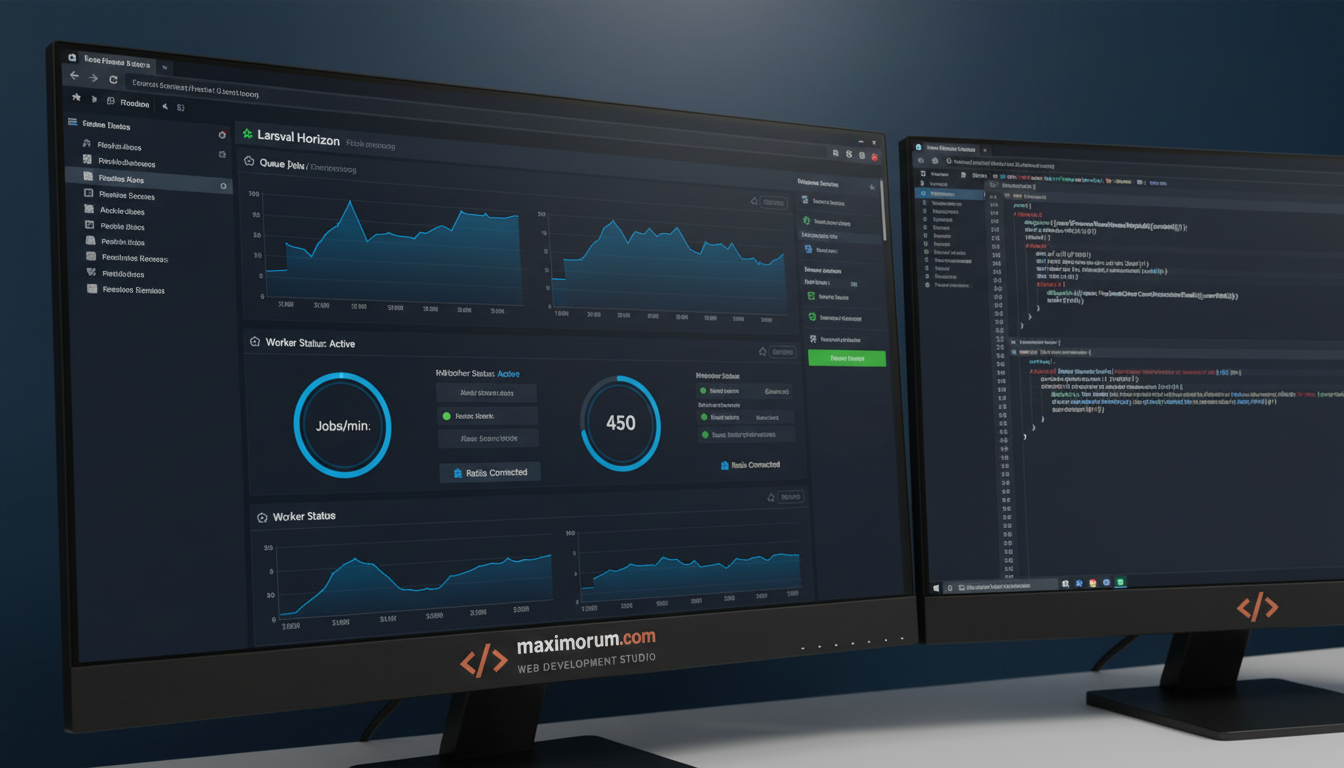
How Laravel queues cut e-commerce checkout times
When a customer clicks "Place Order," every second of wait time costs you conversions. Laravel's queue system moves time-consuming tasks — sending confirmation emails, generating invoices, syncing with Nova Poshta, processing LiqPay webhooks — out of the request cycle and into background workers. Checkout completes in under a second, not five.
What Laravel queues handle in a typical e-commerce build
Email and SMS notifications fire asynchronously as isolated job classes. Nova Poshta and Ukrposhta waybill generation runs after order confirmation, not during it. LiqPay and Monobank webhook payloads are queued and retried automatically on failure. PDF invoice generation delivers to customer inboxes without blocking the storefront response.
The stack we deploy
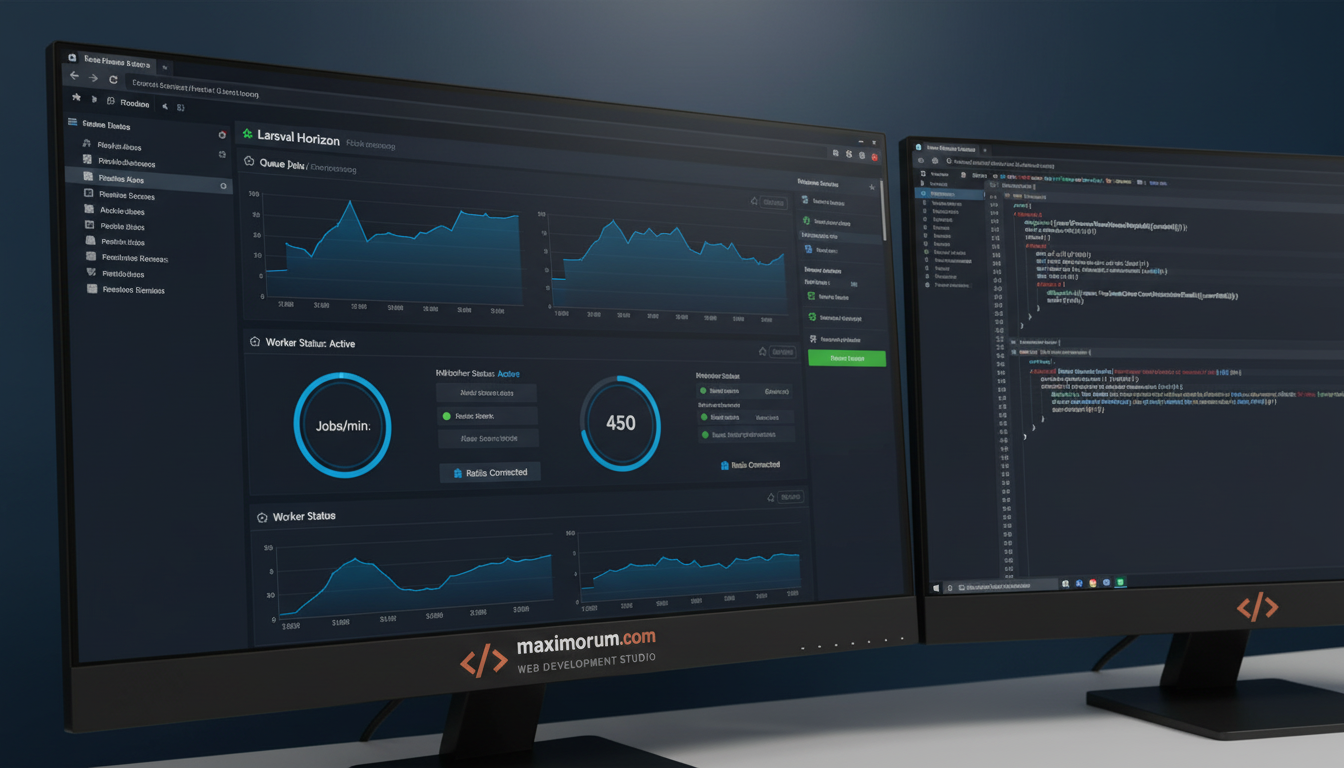
Laravel Horizon — the dashboard for Redis-backed queues — monitors job throughput, failure rates, and worker health in real time. Every job is isolated, retryable, and logged, so no order confirmation slips through during traffic spikes.
Business impact
A client migrating from OpenCart to Laravel saw checkout response times drop from 4.2 s to 0.7 s after moving notification and fulfillment logic to queue workers. Cart abandonment fell 18% in the first month.
If your store sends emails, generates documents, or calls third-party APIs during checkout, you are paying for that latency with lost sales. A properly configured Laravel queue architecture eliminates that cost without touching your storefront UI.
Ready to cut checkout times? Talk to the MaxiMoruM engineering team at maximorum.com.