Every second of checkout friction costs conversions. When an order confirmation triggers synchronous email sends, PDF invoice generation, and warehouse API calls all at once, customers wait — and some leave.
Laravel's queue system moves these tasks to background workers. The checkout returns a fast response while heavy processing happens asynchronously, invisible to the buyer.
Why queues matter for e-commerce
A typical order confirmation flow involves: sending a confirmation email, generating a PDF invoice, notifying a Nova Poshta or Ukrposhta API, updating a CRM record, and calculating loyalty points. Done synchronously, this chain adds 2–6 seconds to the checkout response. With Laravel queues backed by Redis or a database driver, checkout responds in under 300ms while workers handle each job independently.
What the stack looks like
We deploy Laravel queues using:
php artisan queue:workwith Supervisor for process management- Redis as the queue driver for high-throughput stores (500+ orders/day)
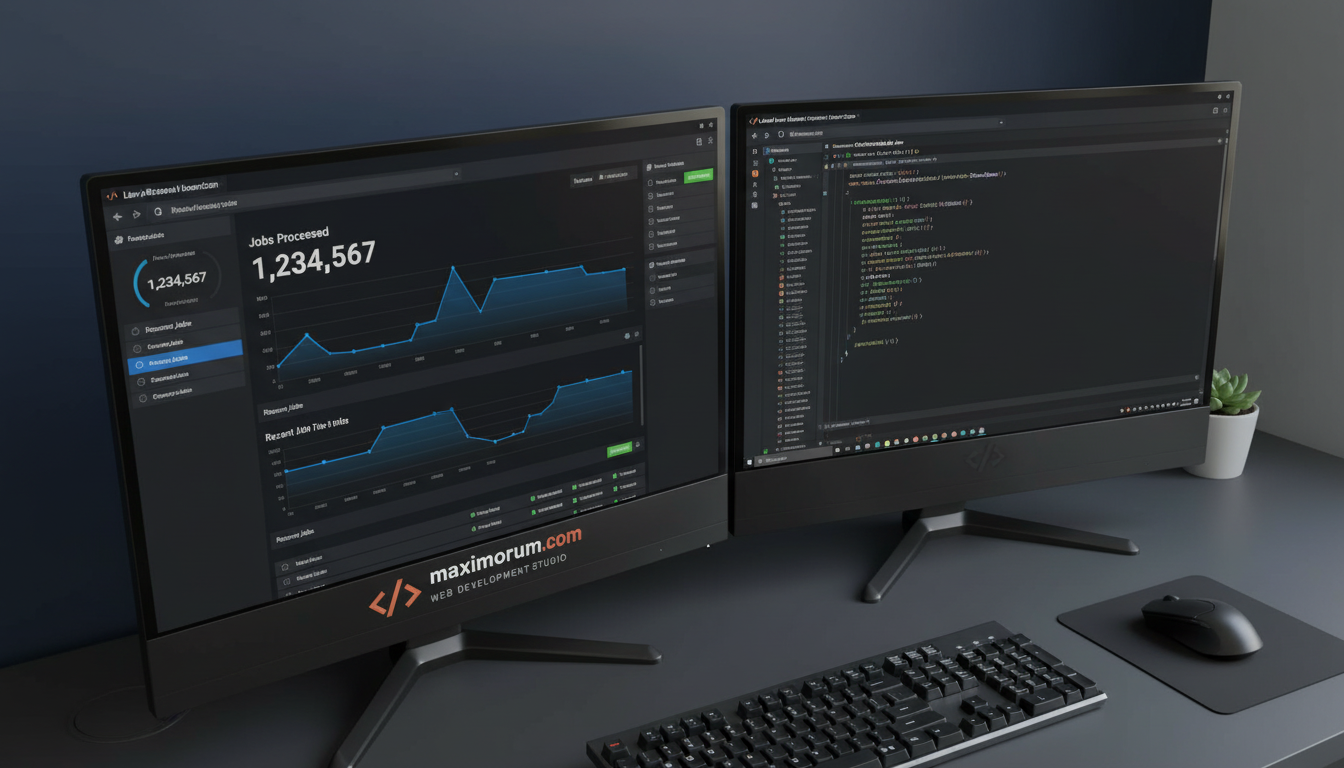
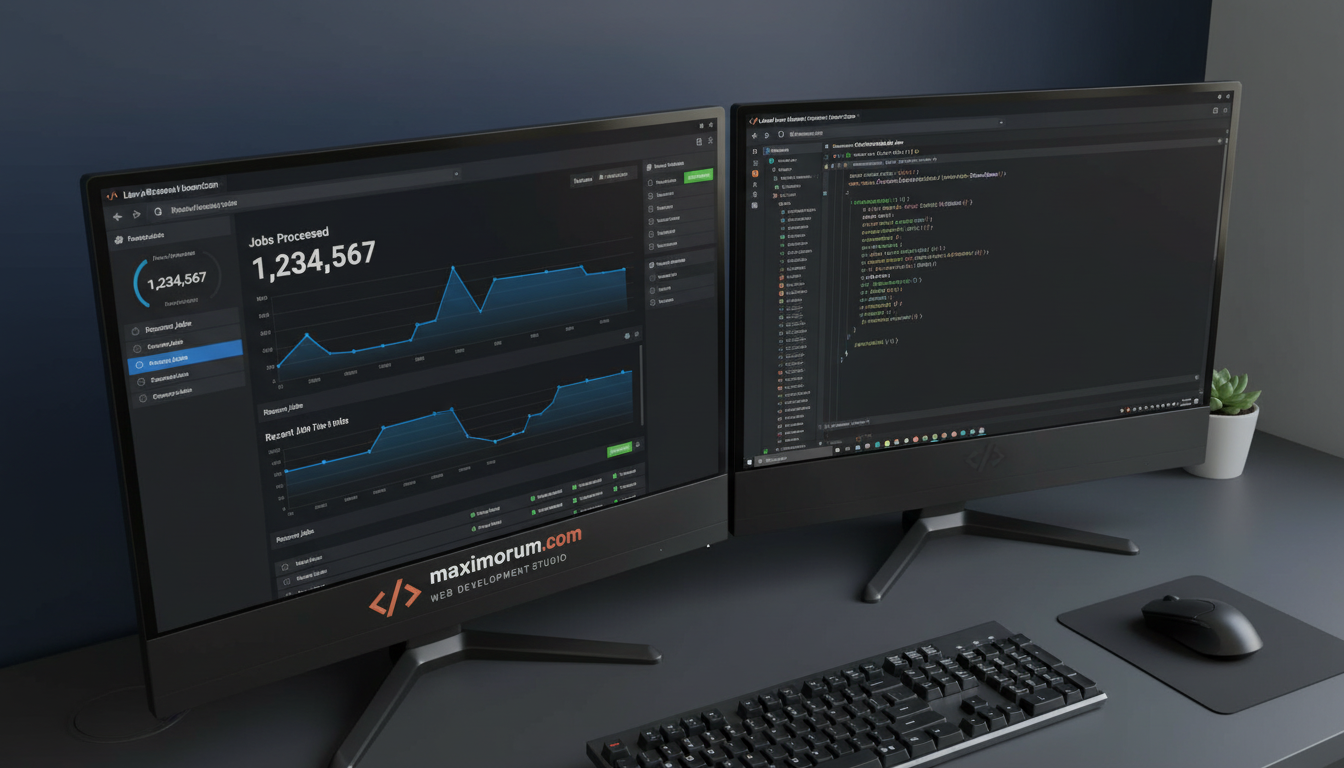
- Laravel Horizon for real-time monitoring and job metrics
- Failed-job retry logic with exponential backoff
For OpenCart stores migrating toward a Laravel API backend, we expose queue-backed endpoints that accept order data, enqueue processing jobs, and respond immediately — decoupling the storefront from backend latency.
Business outcome
One client moved from a synchronous order pipeline to a queued Laravel backend. Average checkout response time dropped from 4.2s to 0.28s. Cart abandonment at the confirmation step fell by 38% over the following quarter.
Ready to move your order pipeline off the critical path? MaxiMoruM has built queue-backed backends for Ukrainian e-commerce operations across OpenCart and custom Laravel storefronts. Talk to us at maximorum.com