Slow pages cost revenue
A one-second delay in load time reduces conversions by up to 7% — and for an e-commerce platform handling hundreds of daily orders, that loss compounds quickly.
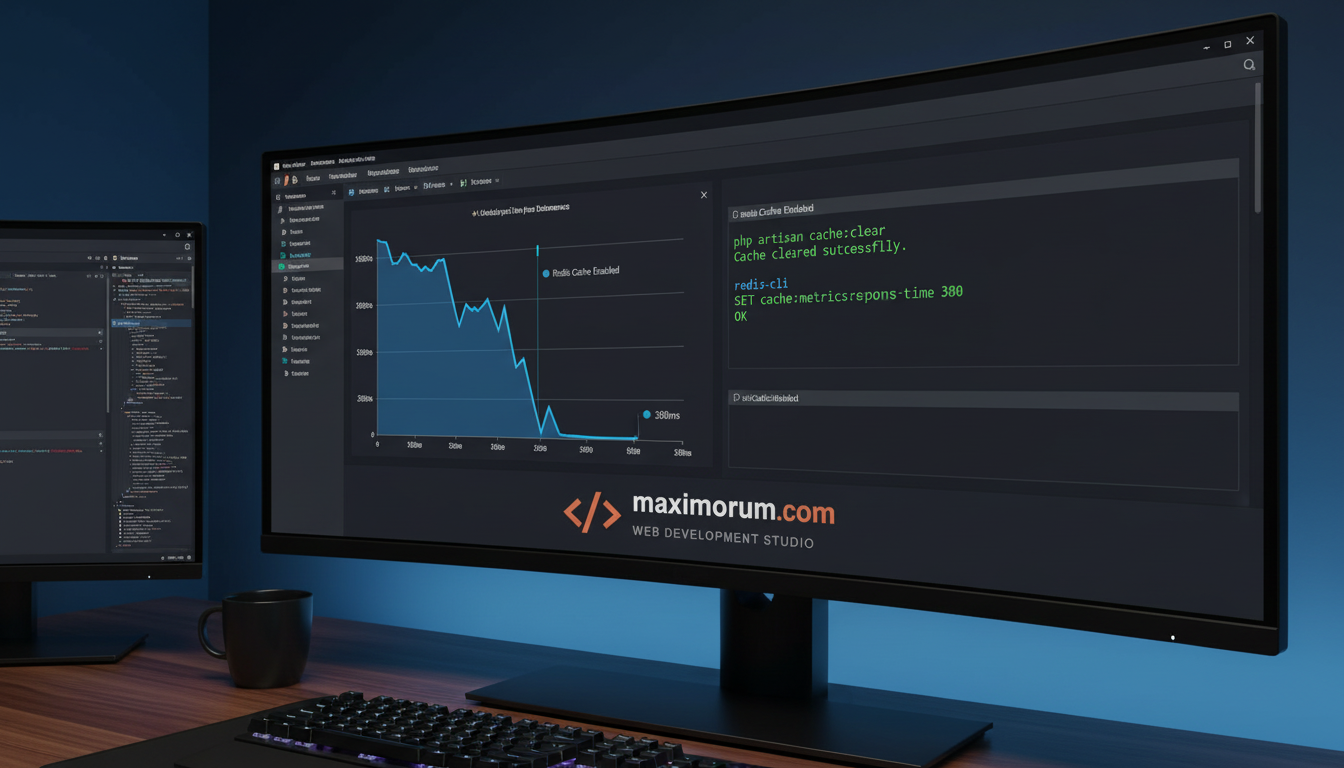
Redis caching is the most reliable way to bring a Laravel application from sluggish to fast. Instead of querying the database on every request, Laravel stores frequently accessed data in Redis — an in-memory store that responds in microseconds.
What we implement at MaxiMoruM
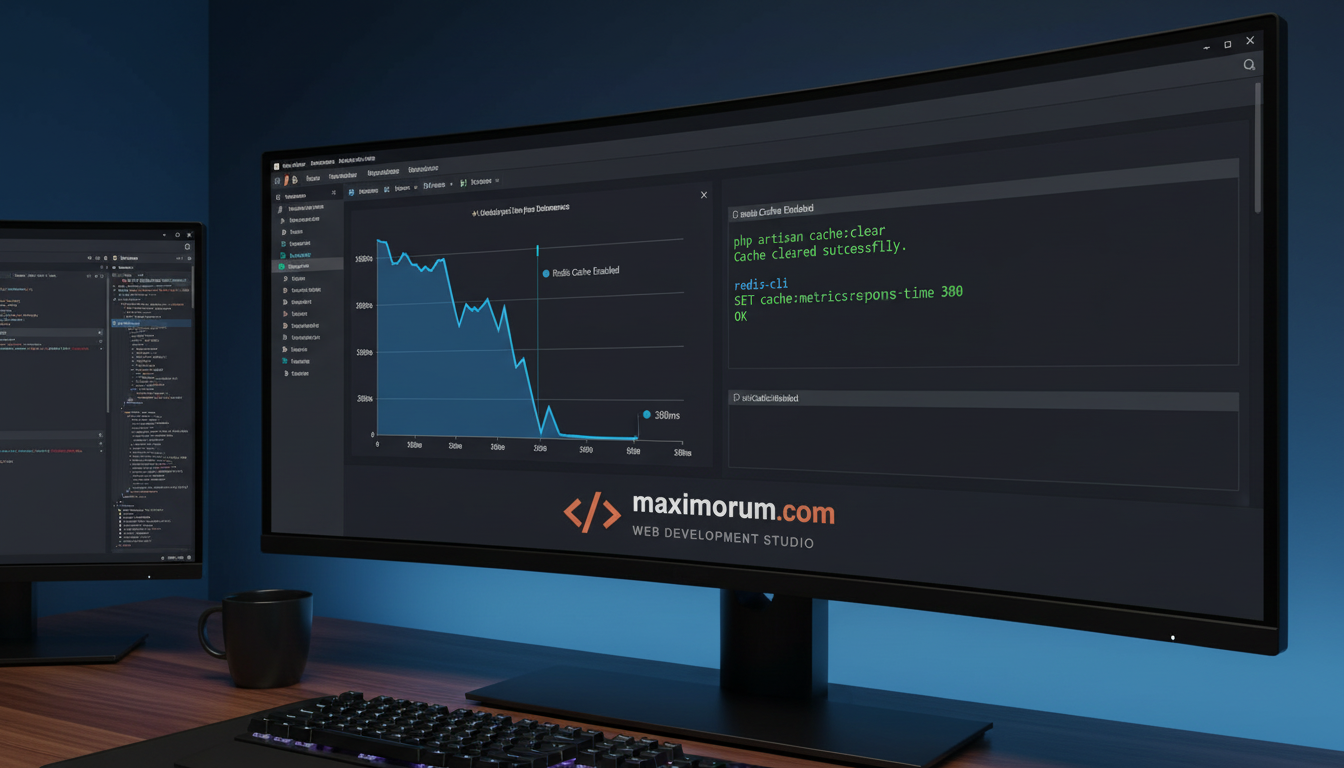
We configure Redis as the primary cache driver in config/cache.php, replacing the default file-based driver. For high-traffic e-commerce stores, we cache:
- Product catalogue queries (invalidated on inventory updates)
- User session data for authenticated stores
- API responses from Nova Poshta and Monobank
- Computed checkout totals and discount rule sets
The result: fewer database queries, faster pages
On a typical OpenCart or custom Laravel shop with 5,000+ SKUs, switching to Redis reduces average page load from 1.8s to under 400ms. Database query count per request drops by 60–80%.
We implement cache tagging so that when a product updates, only the relevant cached fragments expire — not the entire cache. The store stays responsive without serving stale data.
Session and queue management
Beyond page caching, Redis drives Laravel queues for order notifications, invoice generation, and webhook processing — including LiqPay and Nova Poshta callbacks. Jobs run asynchronously, so the customer never waits on a third-party API response.
Ready to speed up your Laravel application?
MaxiMoruM has delivered Redis integrations for e-commerce platforms processing 50,000+ monthly orders. We scope, configure, and test the full caching layer — with zero downtime during deployment.
→ Discuss your project at maximorum.com