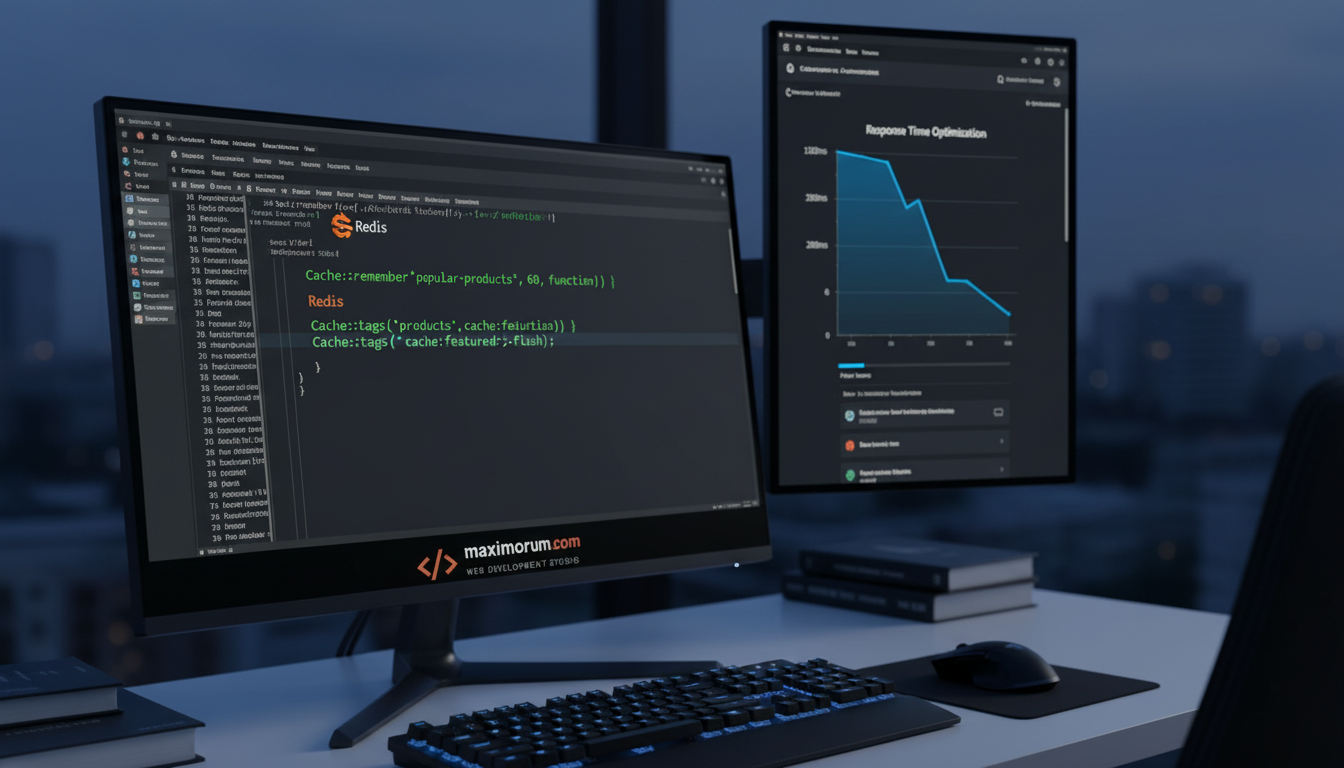
How Redis caching in Laravel speeds up high-traffic e-commerce stores
When an online store processes thousands of orders daily, slow database queries cost revenue. Redis caching in Laravel eliminates the bottlenecks that throttle checkout flows at peak traffic — and the implementation takes less than a day.
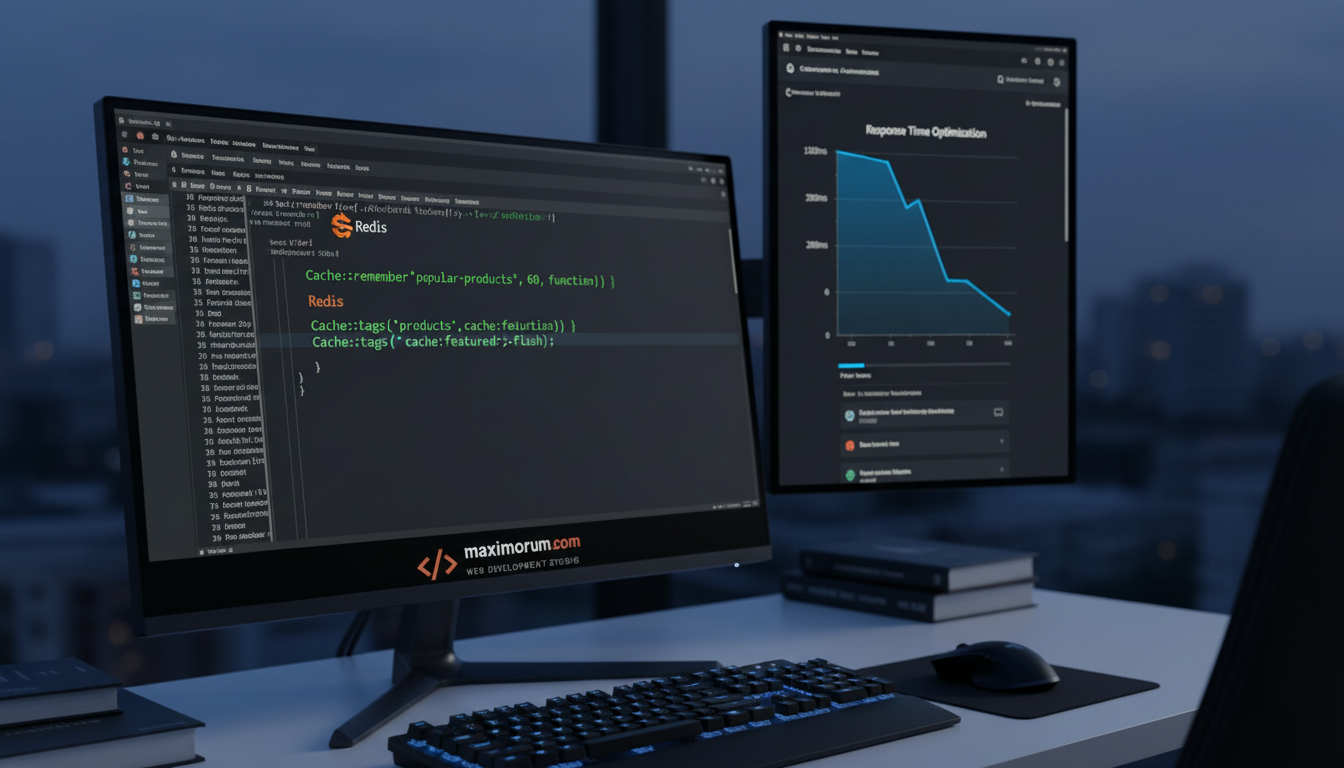
The problem: every page hit talks to the database
Product listings, category pages, and pricing rules are read thousands of times per minute. Without caching, every request queries the database directly. Under load, response times grow and conversion rates fall.
Laravel ships with a driver-agnostic Cache facade. Switching it to Redis requires one config change:
CACHE_DRIVER=redis
SESSION_DRIVER=redis
REDIS_HOST=127.0.0.1
Three layers that deliver the biggest return
Product catalog. Cache listings with Cache::remember() for 60 minutes. Pages that took 800 ms render in under 80 ms.
User sessions. Move sessions from the database to Redis. Session-table locks no longer throttle concurrent checkouts during sales spikes.
Cart and pricing rules. Cache computed discounts and shipping lookups. Checkout responds in under 200 ms even during flash sales.
Cache invalidation without stale data
Tagged caches let you flush only what changed:
Cache::tags(['products', 'category-5'])->remember(
    'product-list', 3600,
    fn() => Product::active()->with('category')->get()
);
When a product updates, you flush its tag — not the full cache. Stock counts stay accurate.
Results from a real project
A Ukrainian retailer migrating from OpenCart to a custom Laravel platform saw checkout latency drop from 1.2 s to under 300 ms after we implemented Redis at the session, catalog, and cart layers. Database CPU load fell by 65%.
Build a faster store
MaxiMoruM engineers Laravel applications with Redis caching built in from day one — not bolted on after launch. Discuss your project at maximorum.com.