<p>Every 100 ms of page load time costs roughly 1% in conversions. For a WordPress store generating UAH 500,000 per month, that gap is real money. At MaxiMoruM, we engineer performance into every WordPress build — from server configuration to code.</p>
<img src="https://contentforge.maximorum.com/storage/images/3/image_515_1778059696.png" alt="WordPress performance optimization dashboard — Google PageSpeed Insights score 91" />
<h2>What slows WordPress down</h2>
<p>Out-of-the-box WordPress handles small sites fine. Add WooCommerce, a dozen plugins, and unoptimized images, and response times climb past 3 seconds. Three areas cause 80% of the slowdowns:</p>
<ol>
<li><strong>Unoptimized database queries</strong> — plugins that fire 50+ queries per page load.</li>
<li><strong>No server-side caching</strong> — every request regenerates the full HTML stack.</li>
<li><strong>Uncompressed assets</strong> — images in PNG where WebP would do, CSS and JS not minified.</li>
</ol>
<h2>How we fix it</h2>
<p>We apply a structured performance stack to every WordPress project:</p>
<ul>
<li><strong>Redis object caching</strong> with wp-cli to cache database results across requests.</li>
<li><strong>Full-page cache</strong> via LiteSpeed Cache or WP Rocket, delivering static HTML to repeat visitors.</li>
<li><strong>CDN integration</strong> (Cloudflare or BunnyCDN) to serve assets from edge nodes closest to your users.</li>
<li><strong>WebP conversion</strong> and lazy loading for all media, reducing image payload by 40–70%.</li>
<li><strong>PHP 8.3 with OPcache</strong> on the server layer, cutting PHP execution time by up to 30%.</li>
</ul>
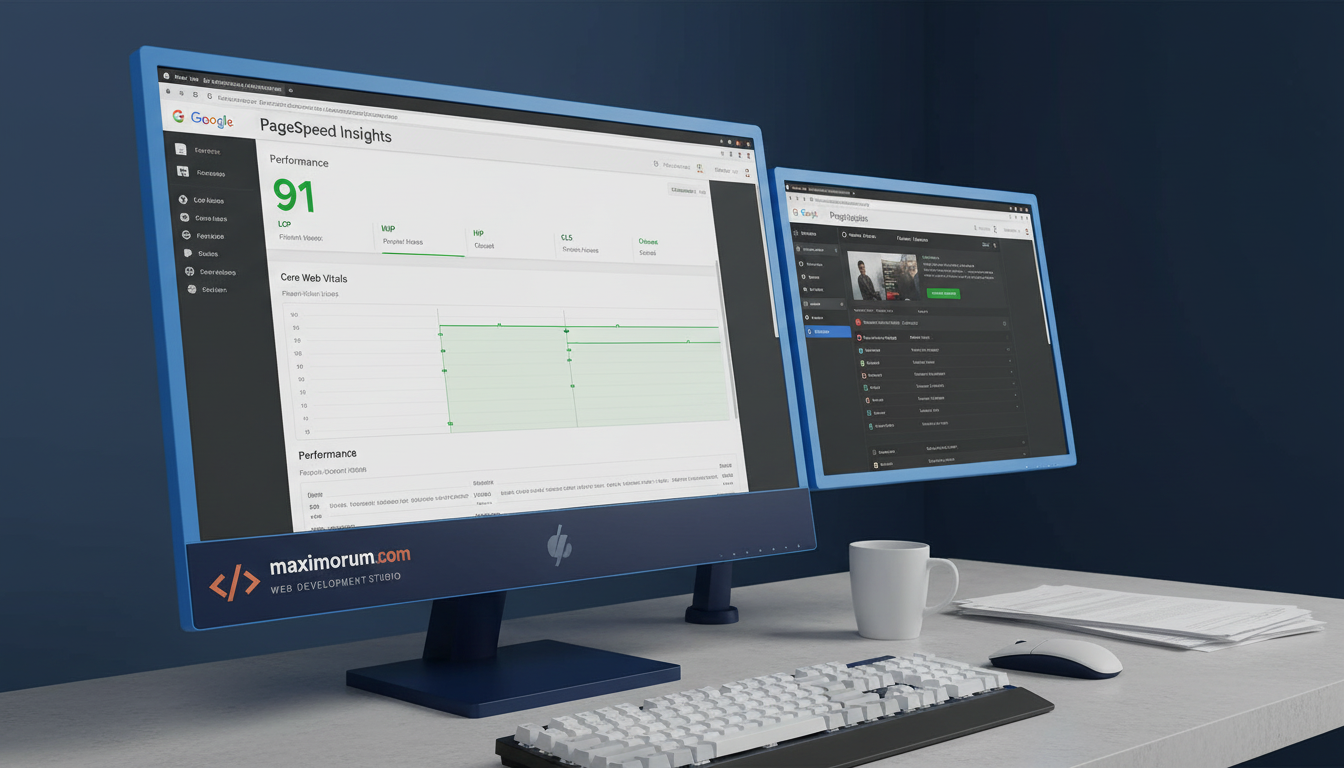
<p>For one Kyiv-based retail client, this stack reduced median load time from 4.1 s to 0.9 s — without changing the site's visual design or feature set. Google PageSpeed Insights score moved from 43 to 91. Organic traffic grew 18% in the following quarter.</p>
<h2>Core Web Vitals: the metric that moves rankings</h2>
<p>Google's Core Web Vitals — LCP, INP, CLS — are ranking signals. A WordPress site that scores green on all three has a measurable SEO advantage over slower competitors. We tune each metric individually: LCP by prioritizing above-the-fold image loading, INP by deferring non-critical JavaScript, CLS by reserving layout space for fonts and images before they load.</p>
<h2>Is your WordPress site leaving performance on the table?</h2>
<p>We audit, optimize, and maintain WordPress sites for businesses that treat their website as a revenue channel — not a brochure. If your site loads in over 2 seconds, a performance audit will show you exactly where the time goes.</p>
<p>→ <a href="https://maximorum.com">Book a free performance audit at maximorum.com</a></p>
How WordPress performance optimization cuts page load time and lifts conversions
D