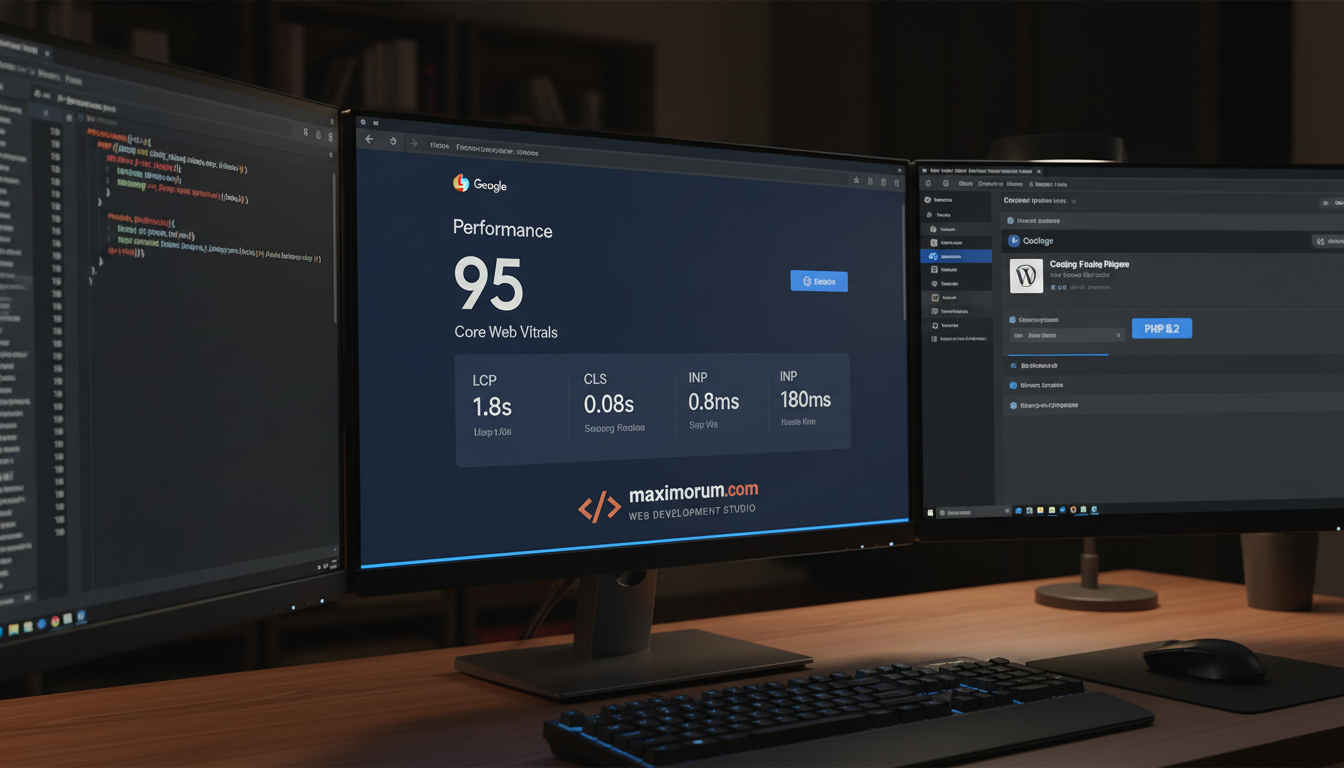
A 1-second delay in page load costs the average e-commerce store 7% in conversions. On WordPress, you can recover that revenue without rebuilding your site — by tuning the right layers of your stack.
Start with the server layer
WordPress runs on PHP. Upgrading from PHP 7.4 to PHP 8.2 alone delivers a 25–30% throughput gain on most WooCommerce stores. Pair that with OPcache enabled and you eliminate script recompilation on every request.
Add object caching with Redis
Database queries are the most common bottleneck on WordPress sites with dynamic catalogs. Redis object caching stores query results in memory, so pages that previously hit MySQL 40 times now hit it twice. On a 10,000-product WooCommerce catalog, this reduces TTFB from 900 ms to under 200 ms.
Implement page caching strategically
Full-page caching with WP Rocket or a custom nginx FastCGI cache layer serves cached HTML directly — bypassing PHP and MySQL entirely for anonymous visitors. For logged-in users and cart pages, configure cache exclusions to keep session data intact.
Compress and deliver assets correctly
Enable Brotli compression server-side, convert images to WebP, and serve static assets through a CDN. This alone cuts page weight by 40–60% for image-heavy product pages.
Measure what matters: Core Web Vitals
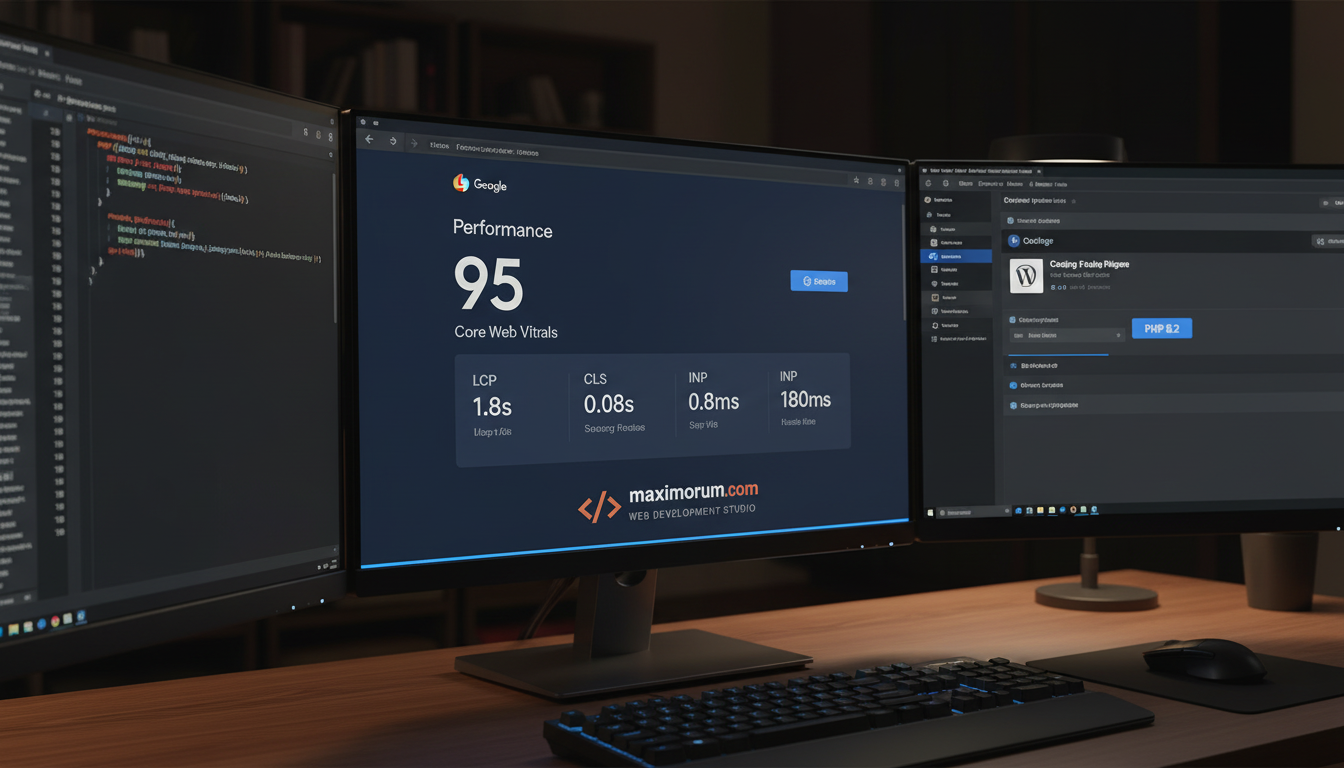
Google's Core Web Vitals — LCP, CLS, and INP — directly influence search rankings. An LCP under 2.5 seconds and CLS below 0.1 are achievable on optimized WordPress without switching platforms.
At MaxiMoruM, we audit and rebuild the performance stack of WordPress stores losing organic traffic to competitors. The typical outcome: a 35–50% improvement in Lighthouse score, a 20–30% reduction in bounce rate, and measurable gains in organic search position within 60 days.
Ready to stop losing revenue to slow page loads? → maximorum.com