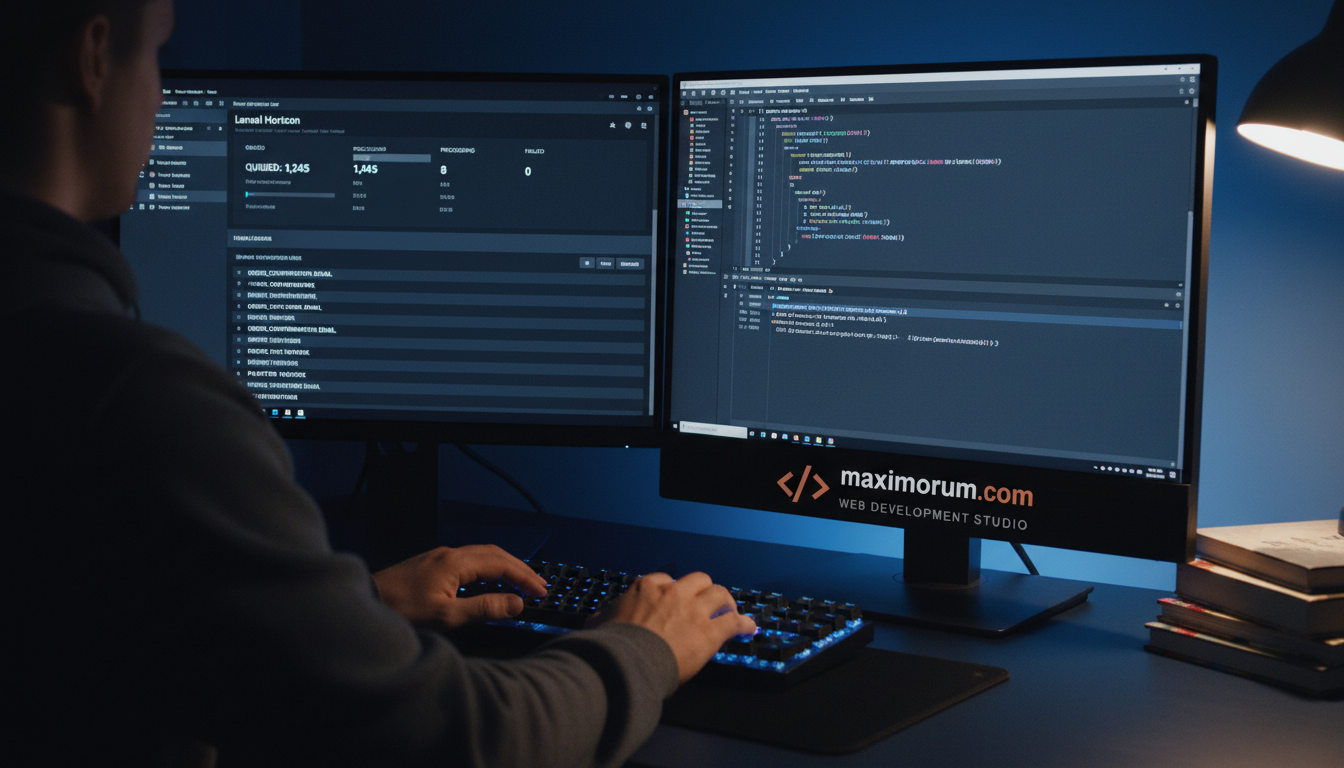
When a customer clicks "Pay", every second counts. Cart abandonment spikes when checkout response time exceeds 3 seconds. Laravel's built-in queue system fixes this — processing order confirmation emails, inventory updates, and payment webhooks asynchronously while your storefront responds instantly.
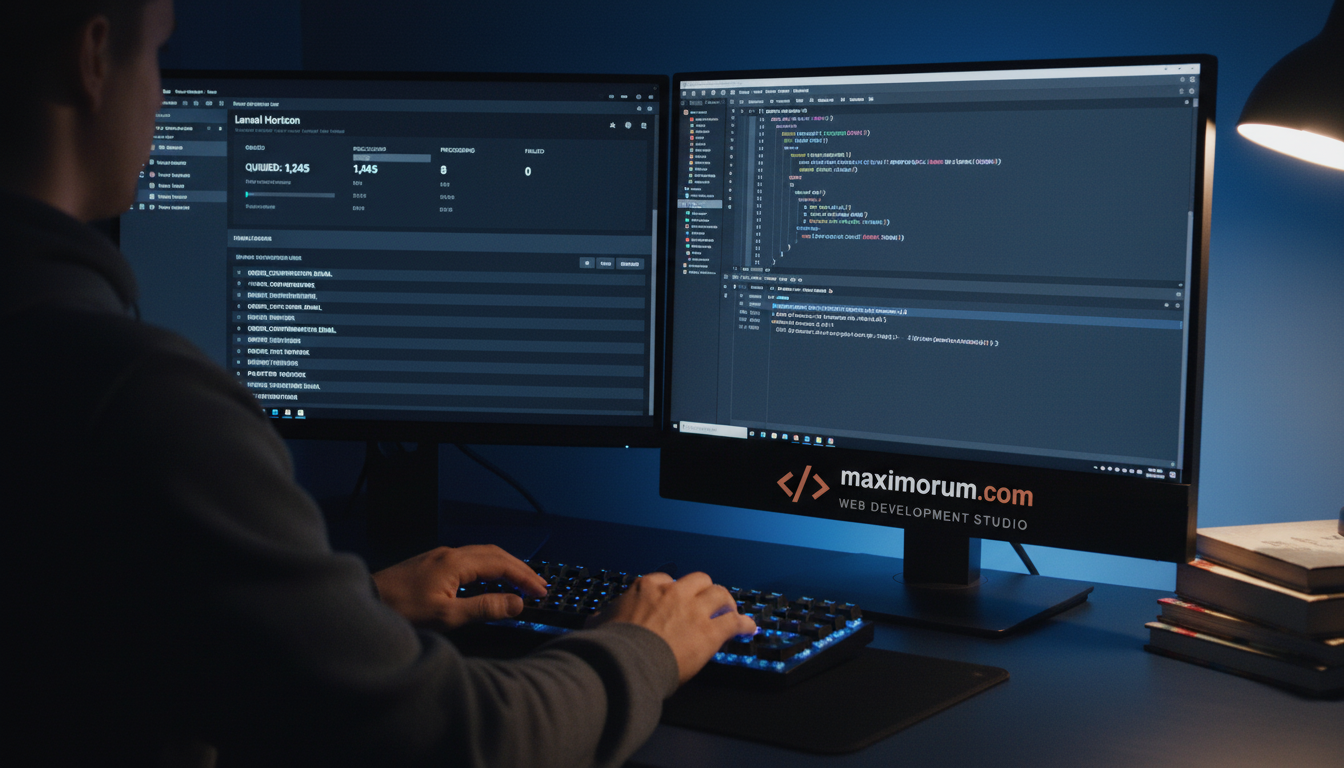
How queues work in a real order flow
A Laravel-powered store dispatches three jobs on every order placement:
- SendOrderConfirmationEmail — queued via Redis, delivered within 5 seconds of purchase
- UpdateInventoryStock — locks and decrements product rows atomically, preventing oversell under concurrent load
- SyncCRMRecord — pushes order data to your CRM or ERP without blocking the HTTP response
Each job retries automatically on failure. Exceptions log to your monitoring stack. Queue workers scale horizontally by adding more processes behind a Redis or database driver — no infrastructure changes required.
Why background processing matters for e-commerce
Synchronous order processing means the customer waits for every downstream call to complete before seeing a confirmation page. A single slow payment webhook or CRM timeout adds 2–5 seconds to checkout. In high-traffic campaigns, that latency compounds into abandoned carts and lost revenue.
Decoupling heavy tasks into Laravel jobs eliminates this bottleneck entirely. The HTTP response returns in under 200 ms. Background workers handle the rest reliably, in order, with full retry logic.
Measured results across client projects
- Checkout response time drops from 2–4 s to under 500 ms
- Order confirmation emails arrive reliably during Black Friday and promotional traffic spikes
- Failed CRM or payment gateway calls retry silently — customers never see the error
- 30–40% reduction in checkout abandonment on stores that migrated from synchronous processing
We built this architecture on Laravel 10 and 11 for clients migrating from OpenCart monoliths and building WooCommerce alternatives. Zero missed orders during peak campaigns.
What a production setup looks like
A typical MaxiMoruM queue setup includes:
- Redis as the queue driver for speed and reliability
- Horizon for real-time monitoring of job throughput and failure rates
- Supervisor to auto-restart queue workers on server reboot
- Dead-letter logging to Slack or email for any job that exhausts retries
The entire stack deploys alongside your existing Laravel application — no separate infrastructure, no new hosting costs.
Build a faster checkout today
Talk to the MaxiMoruM team at maximorum.com. We scope, build, and deploy Laravel queue infrastructure that keeps your e-commerce running at full capacity — even during your biggest sales days.