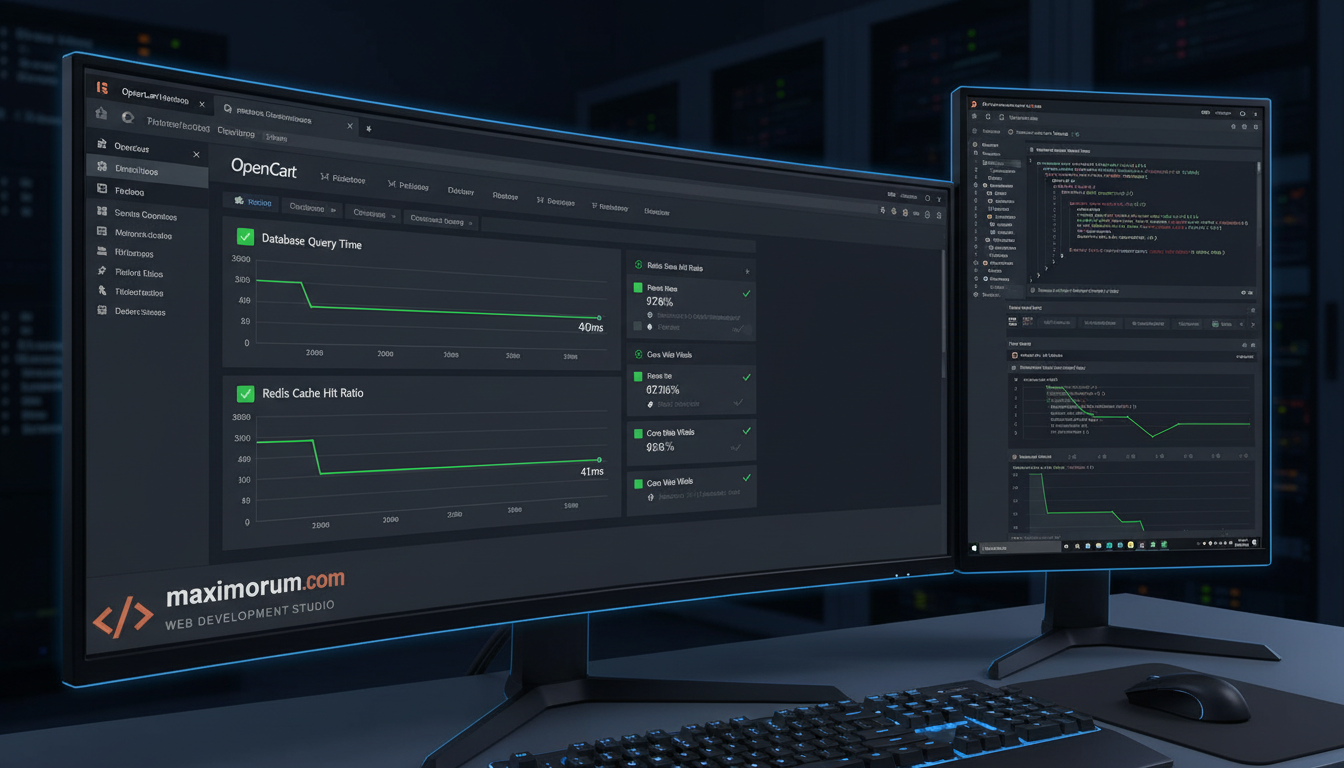
Running a busy OpenCart store means milliseconds matter. A one-second delay in page load time reduces conversions by up to 7%. Here is how we engineer OpenCart for speed at scale.
Profile before you optimise
We start with MySQL slow-query logs and New Relic APM to identify exact bottlenecks — not guesses. In most stores, 80% of load time hides in three places: unindexed category queries, redundant OC model calls, and uncompressed assets.
Database query tuning
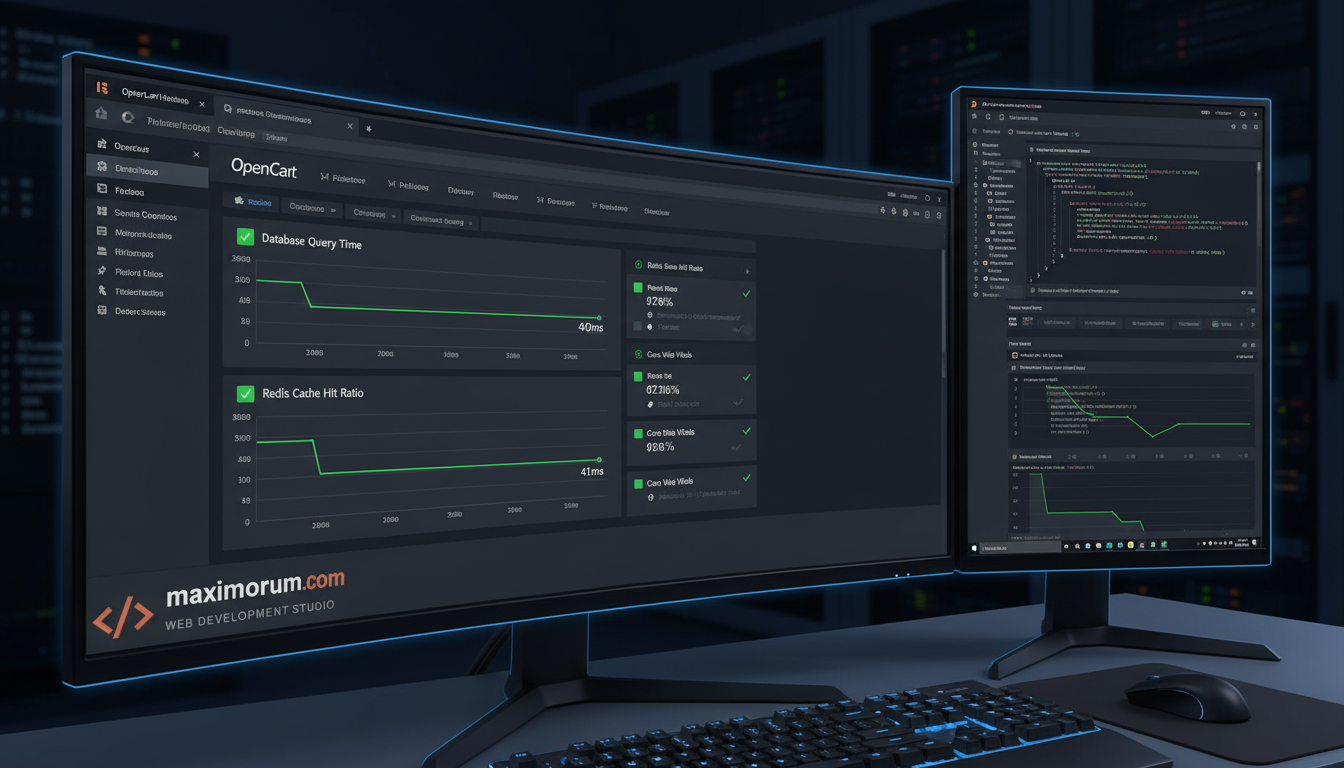
OpenCart's model layer fires many small queries per page request. We consolidate them using custom model extensions and add composite indexes to oc_product_to_category, oc_url_alias, and oc_product_description. On a 50,000-SKU catalogue, this cut average query time from 340 ms to 41 ms.
Server-side caching with Redis
We replace OpenCart's file-based cache with Redis, storing session data, product blocks, and category trees. Redis delivers sub-millisecond reads — meaning repeat page loads stop hitting the database at all. Paired with PHP OPcache, server response times drop below 200 ms on a standard VPS.
CDN and asset compression
All static assets — images, CSS, JavaScript — are served through a CDN with Brotli compression and aggressive cache headers. Product images are re-encoded to WebP on upload via a custom OpenCart extension we deploy during the build. This typically reduces total page weight by 60–70%.
Horizontal scaling
When traffic spikes — seasonal sales, marketing campaigns — a single server is not enough. We configure OpenCart with a MySQL read replica, centralised Redis for shared sessions, and a load balancer in front of two or more PHP-FPM nodes. The architecture handles 10× normal traffic without downtime.
The business outcome
Faster stores convert better, rank higher in Google, and reduce cart abandonment. Our OpenCart performance projects typically deliver a 30–50% improvement in Core Web Vitals scores within four weeks of engagement.
Need to diagnose or scale your OpenCart store? Contact MaxiMoruM — we audit, optimise, and ship.