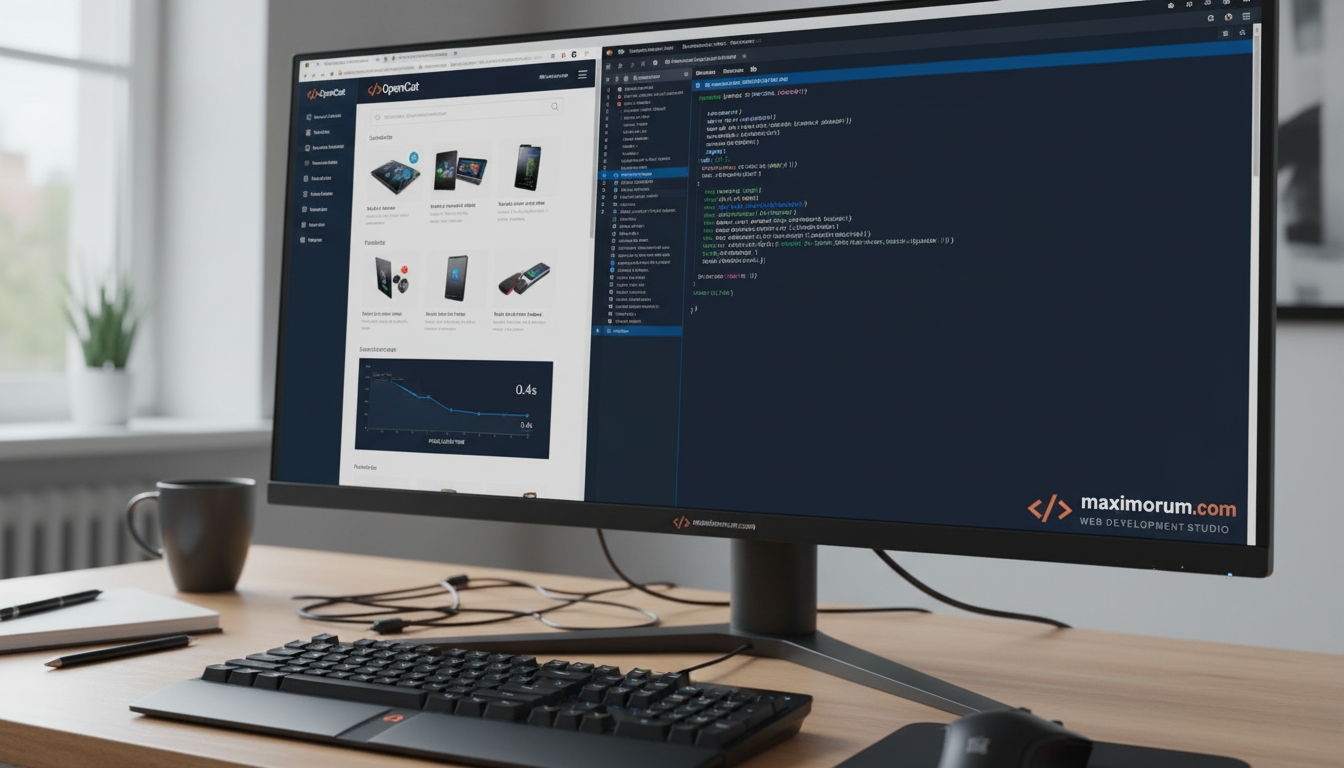
Slow product pages cost sales. When an OpenCart catalog page takes two seconds to render, shoppers leave before they reach the buy button. Redis caching fixes this by serving repeat requests from memory instead of hitting MySQL on every visit. We routinely take page load from 2.1 seconds to under 0.5 — and conversion follows.
Here is the business case first. Faster pages rank better, hold attention longer, and convert more carts. For a store doing 1,000 orders a month, a half-second improvement on category pages is real revenue, not a vanity metric.
Now the technical detail.
Where Redis helps in OpenCart
Catalog queries. Category and product listings run the same heavy joins on every request. Cache the query results in Redis with a short TTL, and the database stops repeating work it already did.
Full-page output. For anonymous traffic — the bulk of most stores — cache the rendered HTML of category and product pages. Logged-in sessions and the cart stay dynamic.
Sessions. Move PHP sessions to Redis so they survive across multiple app servers and load-balanced setups without sticky routing.
How we deploy it
We configure OpenCart's cache driver to Redis, set sensible TTLs per page type, and add cache invalidation hooks so a price or stock change clears only the affected keys. No stale prices, no manual flushing. We monitor hit rate in production and tune key expiry until the database load drops and stays down.
A typical result: 70 to 90 percent of catalog requests served from cache, MySQL CPU cut in half, and page load times that hold steady during traffic spikes and sales campaigns.
Redis is not a silver bullet. Checkout, account, and cart logic stay uncached for correctness. The win comes from caching the right layers — and knowing which to leave alone.
If your OpenCart store slows down under load, we can audit caching, integrate Redis, and benchmark the result. Talk to our team at https://maximorum.com/
Redis caching for OpenCart: cut store page load times
D