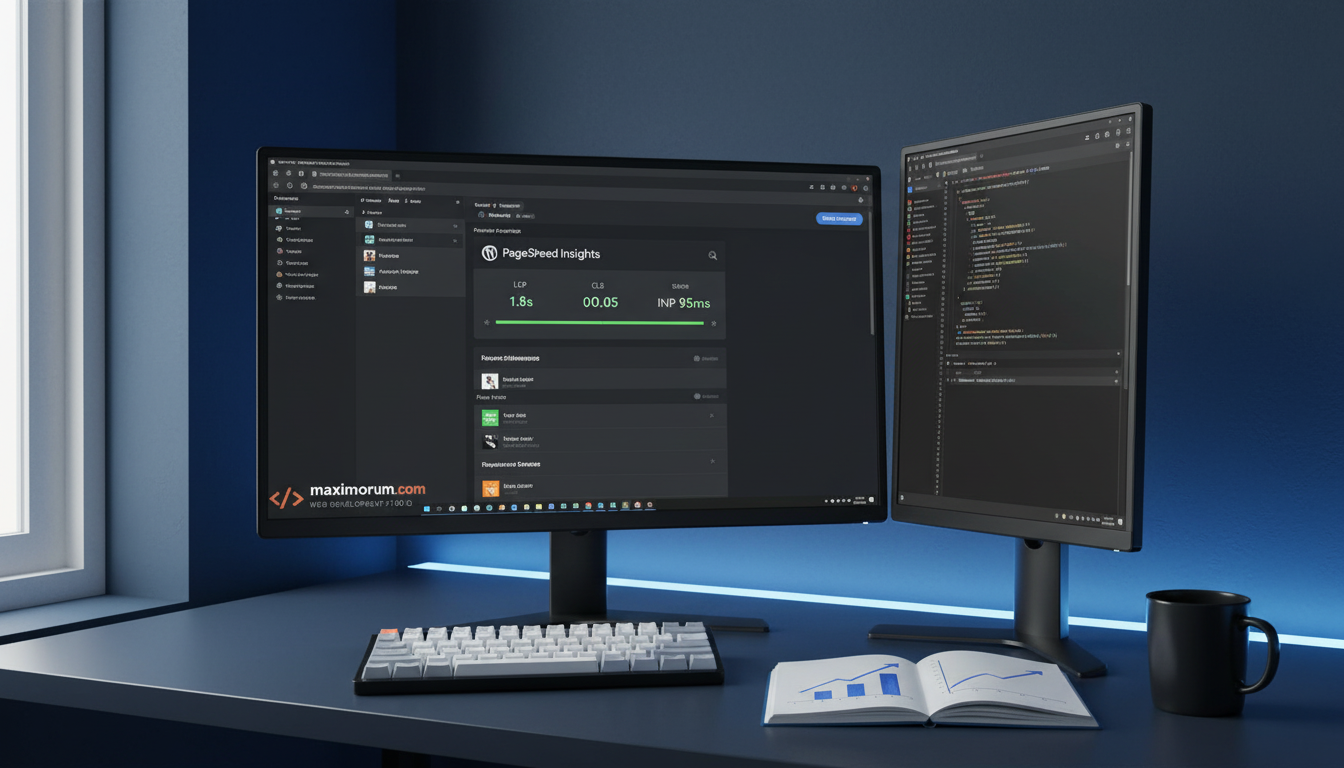
Google has made page speed a ranking factor. A 1-second delay in load time reduces conversions by 7%. For WordPress sites running PHP 8.2+, the gap between a slow site and a fast one is largely technical — and fully solvable.
At MaxiMoruM, we audit and optimize WordPress performance as part of every build. Here is what actually moves the needle.
What Core Web Vitals measure
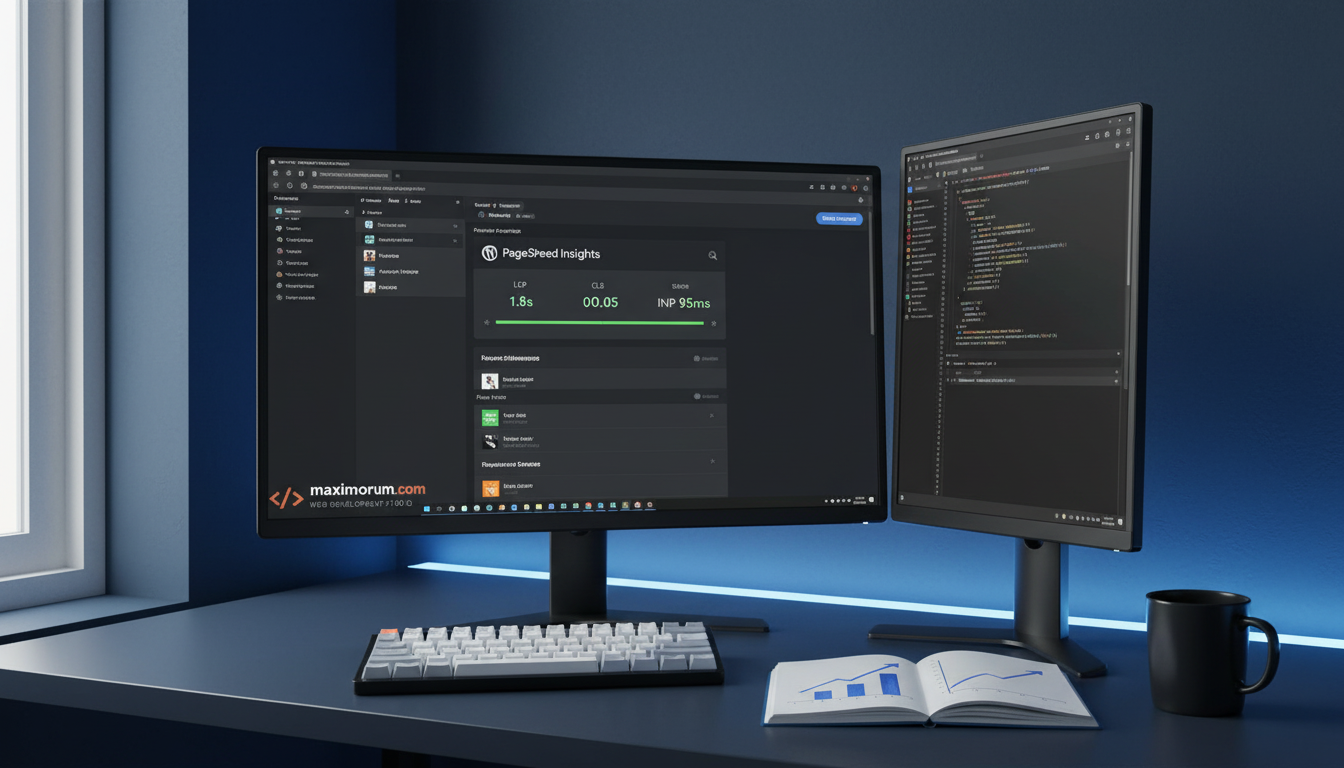
Google's Core Web Vitals focus on three signals:
- LCP (Largest Contentful Paint): how fast the main content loads. Target: under 2.5 seconds.
- INP (Interaction to Next Paint): how responsive the page is to input. Target: under 200 ms.
- CLS (Cumulative Layout Shift): how stable the layout is. Target: under 0.1.
A site that fails these signals ranks lower and converts worse. Both problems cost you money.
The PHP and server layer
PHP 8.2 and 8.3 deliver measurable JIT-compiler gains over PHP 7.4. If your WordPress host still runs PHP 7.x, upgrading is the highest-ROI change you can make today — no code changes needed in most cases.
Pair the PHP upgrade with:
- OPcache enabled and tuned (stores compiled PHP bytecode in memory)
- Redis object cache to skip database queries on repeat page loads
- HTTP/2 or HTTP/3 on the server for multiplexed asset delivery
WordPress-specific optimizations
On the application layer, we apply:
- Critical CSS inlining — above-the-fold styles load without a render-blocking request.
- Lazy loading for images and iframes — native browser feature, no plugin overhead.
- WebP conversion — images served in modern formats cut page weight by 30–50%.
- Asset minification and concatenation — fewer HTTP requests, smaller payloads.
- Database query caching — expensive WP_Query results cached via transients or Redis.
What a well-optimized WordPress site achieves
After a full optimization pass, typical results we deliver:
- LCP drops from 5–8 s to under 2.5 s
- Google PageSpeed score rises from 40–55 to 85+
- Bounce rate falls 15–25%
- Organic search traffic improves within 60–90 days
These are not vanity metrics. Faster pages keep visitors engaged, reduce cart abandonment, and signal quality to Google's ranking algorithm.
When to bring in a developer
Plugin-based optimizers (WP Rocket, LiteSpeed Cache) handle the surface layer well. But if your LCP is blocked by unoptimized theme code, a heavyweight plugin stack, or a misconfigured server, a developer audit is the right next step.
MaxiMoruM has optimized WordPress performance for e-commerce stores, corporate sites, and media platforms. We diagnose at the server and code level — not just with a plugin toggle.
Ready to turn your WordPress site into a fast, high-converting asset? Talk to MaxiMoruM →